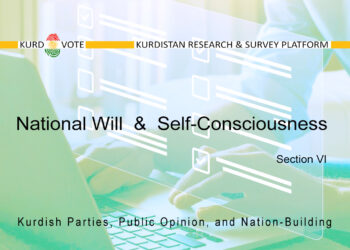
Section VI: National Will and Self-Consciousness
To measure and analyze the collective awareness of national existence and destiny; the understanding of the self as a historical and moral agent; and the degree of belief in agency, responsibility, dignity, and national continuity. This section seeks to reveal the extent to which society understands and reproduces “nationhood” not as a mere identity label, but as a historical, emotional, and ethical will.
A. Historical Self-Consciousness and Collective Memory
To examine the depth and quality of society’s understanding of historical continuity, cultural heritage, and shared narratives; and to assess how this collective memory shapes the present sense of national being. This dimension investigates whether the past is perceived as a source of meaning, lesson, and continuity, or as fragmented and disconnected.
- Perception of Historical Continuity of the Nation: Understanding the nation’s historical continuity from past to present and the sense of belonging to a shared historical chain.
- Representation of the Past in Public Memory: Evaluating how collective memories, narratives of resistance, and national symbols are preserved and transmitted.
- Sense of Ownership of Cultural Heritage: Assessing the degree of attachment, responsibility, and pride toward cultural heritage and symbols of national identity.
- Relation between History, Suffering, and Collective Hope: Analyzing whether historical experiences of suffering and oppression have been transformed into sources of hope and awareness, or have led to collective disillusionment.
B. Collective Will and Political–National Agency
To measure the extent to which society believes in the role of collective will and action in determining national destiny, and the perceived capacity of the people to influence political and historical processes.
- Belief in the Possibility of Collective Change: Evaluating the public belief that the nation can change its destiny.
- Impact of Public Will on Political Destiny: Examining the perceived efficacy of popular will in decision-making processes and power structures.
- Power of Solidarity against Structures of Power: Measuring the belief that social unity and cohesion can resist domination and oppression.
- Readiness for Participation in National Decision-Making: Assessing the psychological and social readiness for collective action and participation in decisions concerning the nation’s future.
C. Self-Confidence, Dignity, and National Pride
To evaluate the sense of self-worth, internal reliance, and trust in national capabilities in political, cultural, and civilizational domains. This dimension examines the existential self-awareness of the nation as an entity endowed with inherent dignity and moral worth.
- Confidence in National Capacity for Progress: Measuring belief in the nation’s scientific, cultural, and human capacities for independent growth and advancement.
- Sense of Dignity against External Domination: Examining the sense of national pride and dignity in the face of external powers or forces of humiliation.
- Belief in Moral Equality with Other Nations: Understanding perceptions of the nation’s moral and ethical status in comparison with other nations.
- Self-Reliance in the Path of Development and Survival: Measuring the inclination toward internal reliance in addressing challenges and overcoming external dependency.
D. Moral Responsibility and National Conscience
To analyze the moral and ethical foundations of national behavior and judgment; the degree of responsibility felt toward collective welfare and justice among members of the nation; and the presence of a collective conscience in historical decision-making.
- Duty toward the Common Good: Measuring the sense of obligation toward collective welfare and national interests.
- Collective Guilt or Pride: Examining how society confronts its historical errors and achievements.
- Moral Criteria in National Judgment: Evaluating the ethical standards used to assess national and political actions and decisions.
- Collective Conscience in Times of Crisis: Measuring empathy, responsibility, and altruism during national crises.
E. Sustainability, Hope, and Historical Continuity
To assess society’s capacity to regenerate hope, preserve the nation’s spiritual continuity, and resist internal and external threats. This dimension measures the future-oriented aspect of national self-consciousness.
- Hope in the National Future: Measuring levels of optimism, expectation, and faith in the collective continuity of the nation.
- Capacity for Resistance against Threats: Assessing the nation’s resilience and endurance in facing external pressures or internal crises.
- Sense of Continuity across Generations: Analyzing the transmission of values, memory, and national language among different generations.
- Image of the Nation’s Future in the Minds of Youth: Examining how the younger generation envisions the nation’s future, their perceived role within it, and their belief in the possibility of shaping that future.